
TOUR: Olmsted's Vision for the U.S. Capitol Grounds: A Landscape of Democracy
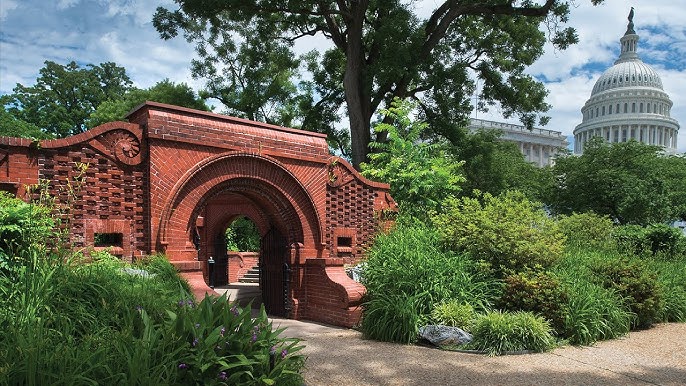
A Tour of Olmsted’s Vision for the U.S. Capitol Grounds: A Landscape of Democracy
Saturday, May 9, 2026
12:45 PM - 3:00 PM
Registration Required | Tickets $25/person | No Refunds
Join us as we step into a living documentary of American landscape design where Steve Livengood, Chief Guide and Public Historian of the U.S. Capitol Historic Society and a board member of the Olmsted Network, guides us on a tour of the U.S. Capitol grounds.
Our Tour:
The U.S. Capitol Grounds are not simply the setting for one of the nation’s most iconic buildings, they are a carefully designed landscape that reflects the ideals of a democratic society, shaped in large part by the vision o Frederick Law Olmsted.
This tour explores how Olmsted transformed the Capitol’s surroundings in the late 19th century from a loosely organized expanse into a unified and intentional civic landscape. Widely regarded as the father of American landscape architecture, Olmsted is best known for designing Central Park in New York and for his influential role in shaping Rock Creek Park, one of the earliest large public parks in the nation’s capital. Across his work, he believed that thoughtfully designed green spaces could elevate public life, promote well-being, and strengthen democratic ideals.
At the Capitol, Olmsted brought both artistry and purpose, designing grounds that are at once dignified and welcoming. As we walk, you will notice the gently curving pathways, a hallmark of his approach. Rather than rigid, formal lines, these paths encourage a natural flow of movement, inviting visitors to experience the space gradually. The topography itself was carefully shaped, with subtle rises and terraces that enhance views of the Capitol while softening its imposing scale.
Olmsted’s planting design plays a crucial role in this experience. Trees and shrubs were placed to frame vistas, create shaded areas, and introduce moments of intimacy within the expansive grounds. The Capitol is at times fully revealed, and at others partially obscured, allowing for a dynamic visual relationship between architecture and landscape. Along the way, you may even discover the charming and often overlooked Summerhouse, tucked quietly among the trees, a small but delightful example of how Olmsted’s design attends to moments of rest and human scale.
The grounds were designed not only to be admired, but to be used. Broad lawns, seating areas, and quiet corners offer places for rest, gathering, and reflection. Even subtle features throughout the landscape reflect Olmsted’s belief that comfort and accessibility are essential to great public spaces.
Seen through Olmsted’s design, the Capitol Grounds become more than a backdrop; they are an integral part of the civic experience. Here, landscape and architecture work together to express the values of openness, balance, and shared ownership that define the nation itself.
Meeting Point:
Please arrive by 12:45 p.m. at the Neptune Fountain located on First Street and East Capitol Street SE, in front of the Library of Congress. OLLI’s tour coordinator, Elena Vejarano, along with our guide, Steve Livengood, will greet participants at this location.
Getting There:
There are three Metro stops within walking distance of Capitol Hill:
- Capitol South – Located at First Street between C and D Streets, SE.
- Federal Center, SW – Located at the southwest corner of Third and D Streets, SW.
- Union Station – Located at First Street, NW, and Massachusetts Avenue.
Please keep in mind that there is very little public parking available near the Capitol. The nearest public parking facility is at Union Station, to the north of the Capitol.
Metered street parking is found along the Mall to the west of the Capitol
Register for this Event